As the 1960s drew to a close, the United States put a man on the moon, which was an astounding feat, but there were many other things that took place at the turn of the decade. In 1969, Federal Aviation Administration (FAA)-approved courses in air traffic management were offered as part of the regular 1968-69 curriculum by a number of junior colleges that were participating in an FAA-organized, cooperative aviation education program (designed to help meet the critical need for air traffic control personnel).
Under the program, the FAA tested students for suitability for Air Traffic Control (ATC) work. Those enrolled served tours of duty at FAA installations while pursuing their college work. During their first semester of ATC course work, these students were employed as GS-3 flight data aids; they were to become eligible for promotion to GS-4 during their second semester.
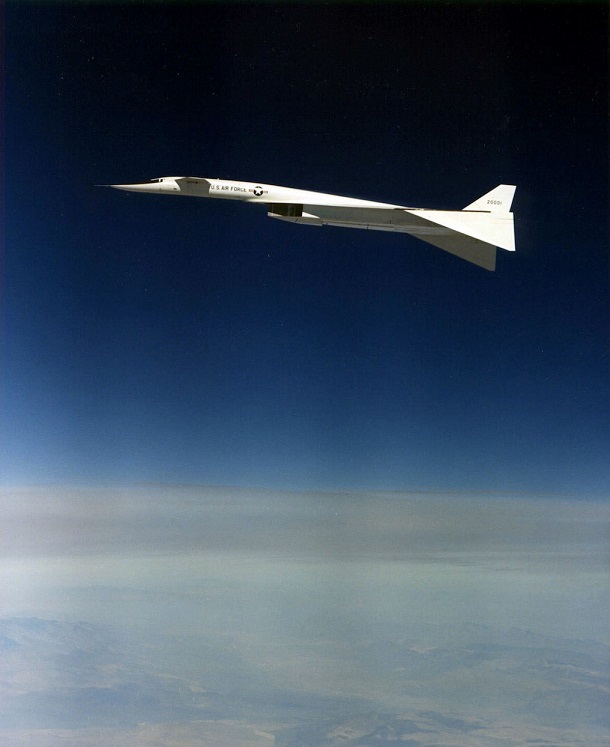
February 4, 1969: The XB-70 supersonic research aircraft made its final flight, from Edwards AFB, Calif., to Wright-Patterson AFB, Ohio, where it was placed on exhibit in the Air Force Museum.
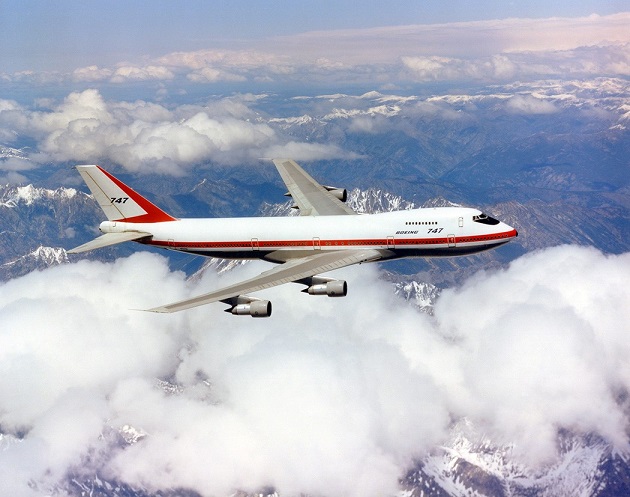
A few days later, on February 9, 1969, The Boeing 747, the first of the wide-body jetliners, made its initial flight. Just a few months earlier, on September 30, 1968, Boeing had unveiled the large subsonic jet, which was powered by four Pratt & Whitney JT9D-3 turbofan engines, each rated at 43,500 pounds of thrust. The plane had a maximum takeoff weight of 710,000 pounds and a maximum payload of 220,000 pounds. Its seating capacity ranged up to 490 passengers, although most airlines planned a seating configuration in the 350-365 range. The FAA certificated the 747 on Dec 30, 1969. The 747 entered service with a takeoff from New York for London on Jan 22, 1970. Trans World Airlines inaugurated the first transcontinental 747 service, between Los Angeles and New York, on Feb 25, 1970.
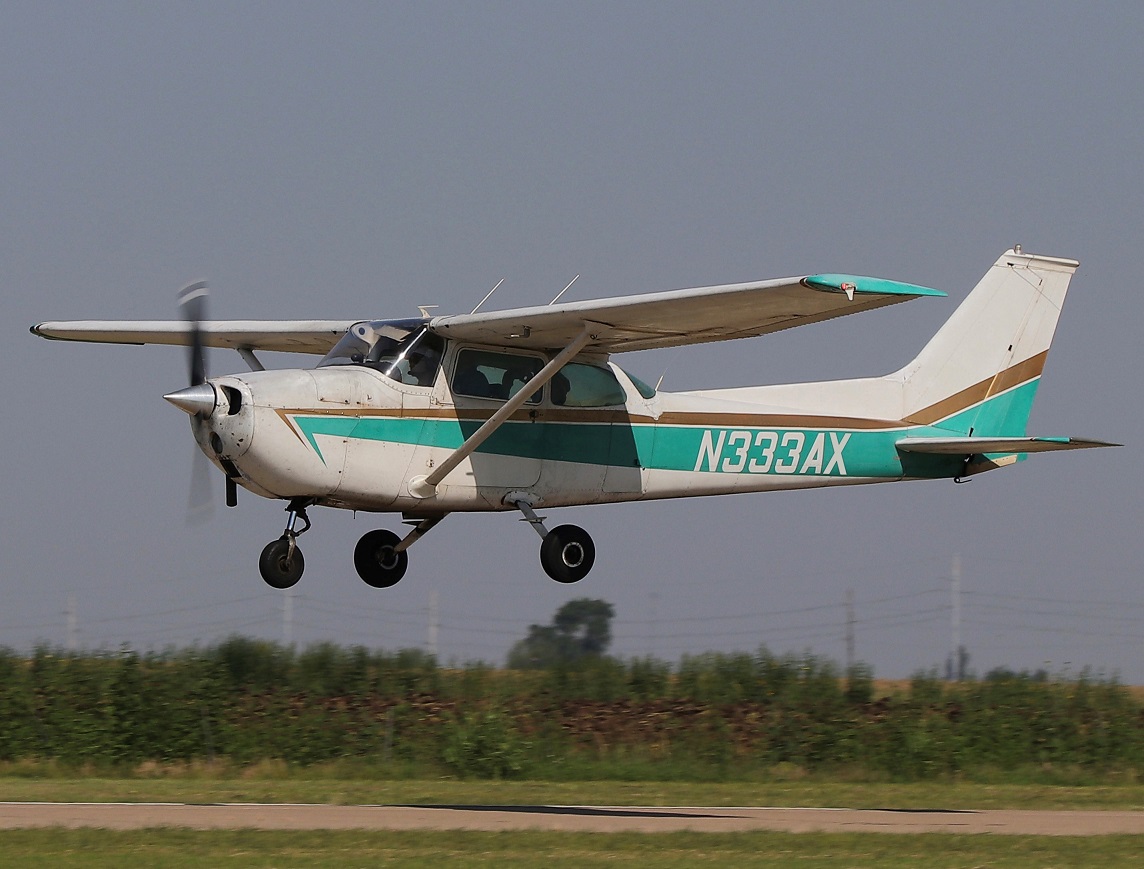
The Civil Aviation Registry made changes affecting the entire aviation industry on February 21, 1969. To keep pace with the growth of the U.S. civil aviation fleet, the FAA expanded the number of aircraft identification numbers available. The identification numbers continued to consist of the prefix letter "N," followed by not more than five symbols. These symbols could be comprised of all numerals (e.g., N10000), or of one to four numerals with a suffix letter (e.g., N1000A). In the past, the FAA had sometimes also assigned identification numbers with one to three numerals and two suffix letters (e.g, N100AB), but only to fulfill certain special requests. Now, however, FAA permitted the unrestricted issuance of these identification numbers consisting of one to three numerals and two suffix letters. This change increased the number of available identification numbers from about 339,000 to about 739,000.
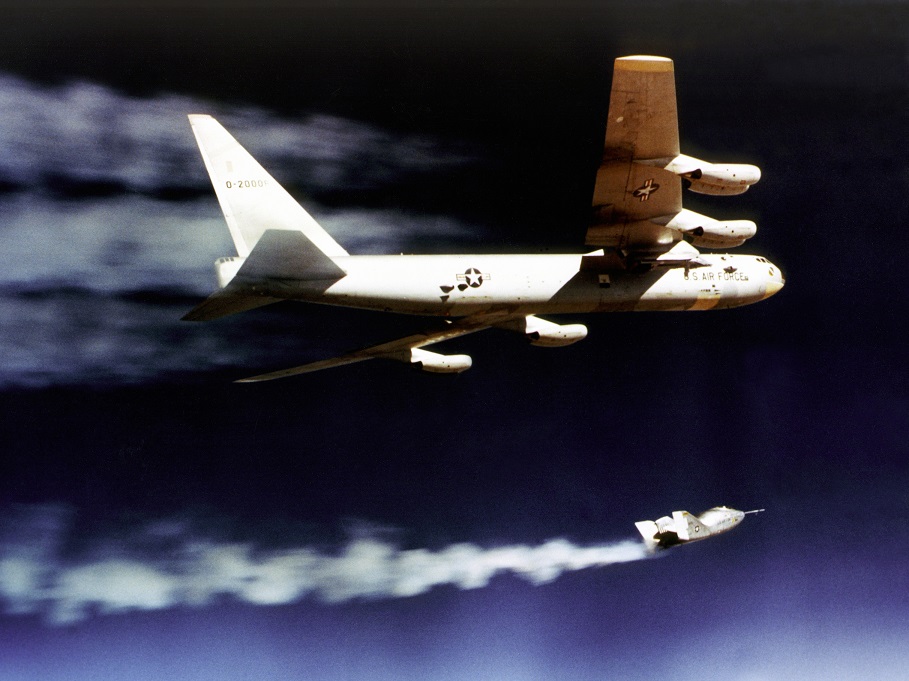
May 8, 1969: The Martin Marietta X-24A rocket-powered, manned, lifting-body research aircraft made a successful 4-minute glider (unpowered) flight at Edwards AFB, Calif. The X-24A was released from underneath the wing of a B-52 Stratofortress at 45,000 feet. The aircraft made its first powered flight on March 19, 1970. Development of the X-24A came as part of Martin Marietta’s program to develop a maneuvering, manned re-entry vehicle able to perform as a spacecraft in orbit, fly in Earth’s atmosphere like an aircraft, and land at conventional airports.
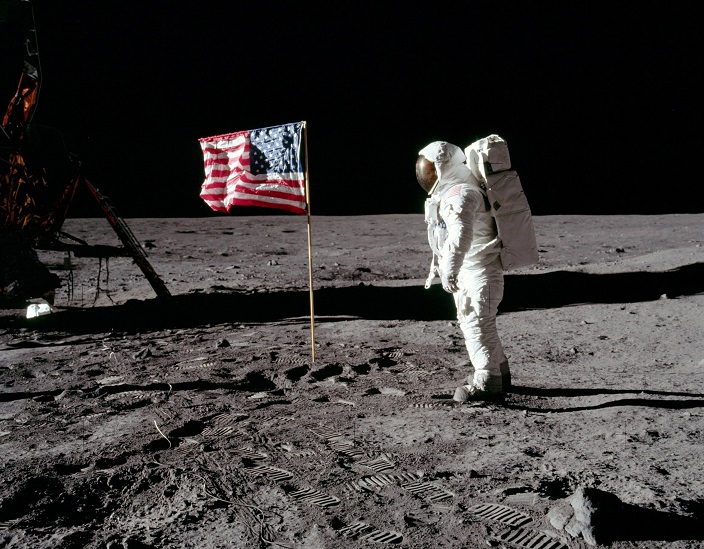
As alluded to earlier, July 20, 1969 will always be a special day in Aeronautical history. Astronauts Neil A. Armstrong and Edwin E. Aldrin, Jr., became the first people to land on the Moon, while Michael Collins remained in lunar orbit. Later in the day, Armstrong and Aldrin then became the first to climb out of the spacecraft and walk on the lunar surface. The National Aeronautics and Space Administration’s (NASA) Project Apollo achieved five more Moon landings between this date and December 11, 1972.
On September 23, 1969, President Nixon announced that the Supersonic Transport (SST) development program would continue, because the project was essential to maintaining U.S. leadership in world air transport. The President asked Congress to appropriate $96 million during fiscal year 1970 ($662 million over a five-year period - fiscal year 1970 through fiscal year 1974) to pursue the program.
On October 30, 1969, the FAA dedicated its new Systems Training Building at the Aeronautical Center. In addition to classrooms for air traffic control and systems maintenance personnel training, the building contained simulators, computers, and other equipment used for training FAA personnel.
On February 18, 1970, the FAA’s first IBM 9020 computer and its associated software program became operational at the Los Angeles ARTCC. The new computer system was at the heart of the new semiautomated airway air traffic control system--NAS En Route Stage A. This equipment reduced controller workload by automatically handling incoming flight information messages, performing necessary calculations, and distributing flight data strips, as needed, to controller positions. The agency planned to install similar equipment at all of the centers. With the new automated, nationwide system each center would have the capability to collect and distribute information (about each aircraft’s course and altitude) to all the sector controllers along its flight path. The new computers also had the ability to record and distribute any changes registered in aircraft flight plans while en route.
Also in February of 1970, the FAA initiated a new training program for the air traffic and electronic technician occupations. The agency hoped that the project, (known as the "150 Program" because of the number of positions initially allotted to it) would work to broaden the recruitment base and equalize opportunities for minorities. Candidates began at the GS-4 level, and after successfully completing a six-month training program at the Aeronautical Center, became GS-5s. The 150 Program was later renamed the Pre-development Program.
Midway through 1970, on June 25th, the first series of area navigation instrument approach procedures in the United States went into effect at six terminal areas--Kirksville, Mo., Longview, Tx., and four locations in California (Fullerton, Lancaster, Palm Springs, and Torrance). The new procedures permitted pilots of aircraft equipped with area navigation equipment to make straight-in instrument approaches to runways without the use of runway-oriented electronic approach aids. This eliminated the need for pilots to conduct time consuming turns and circling maneuvers that were required by conventional IFR approaches.
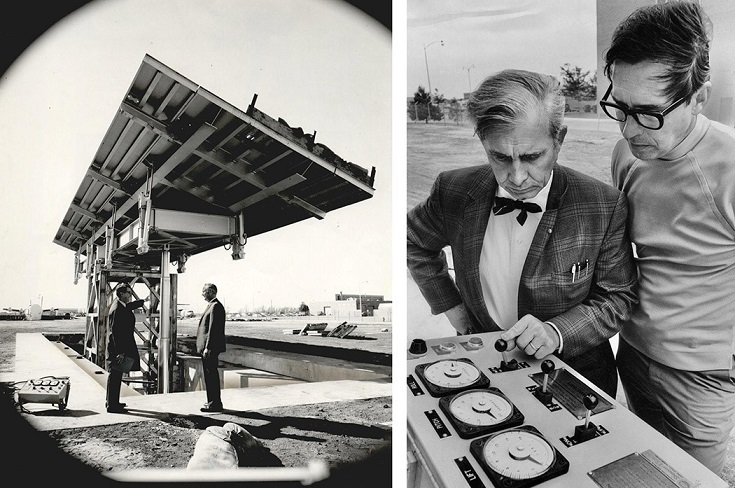
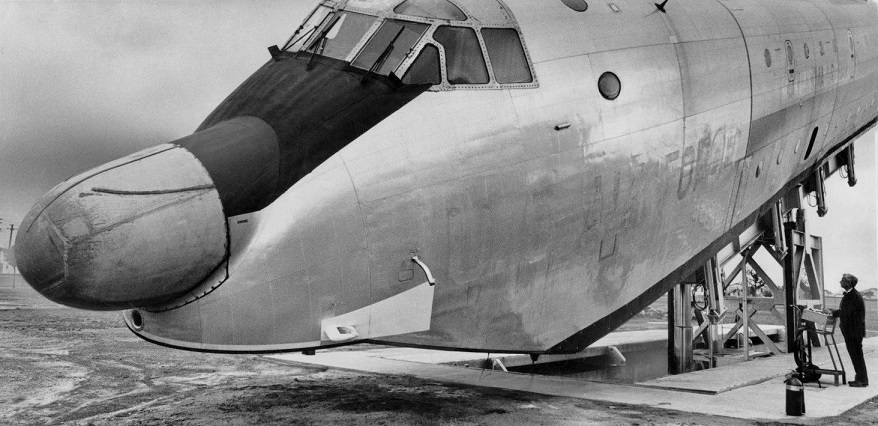
In March of 1970, CAMI installed a unique Emergency Aircraft Cabin Evacuation Facility (ACEF). The attitude positioner was designed to accommodate larger aircraft than the orginal Globemaster (wide body jets). The first evacuation tests were done with a C-124 cabin.
On July 13, 1970 the FAA announced an expansion of the air traffic controller training facilities at the Aeronautical Center. A new building would be constructed that would provide additional office space as well as additional classrooms for air traffic control training. Plans were made, but it took until 1989 to break ground for the building named after astronaut, General Thomas P. Stafford.
On August 11, 1970, the FAA withdrew notice of proposed rulemaking requiring the use of protective smoke hoods. The agency had proposed on January 6th of 1969 that these hoods be carried on all large airplanes for use by occupants during evacuation when fire or smoke was present. After further study, however, the FAA decided that the use of the hoods might produce unacceptable delays during evacuation. Rapid evacuation after a crash landing, the agency held, was the most vital element for survival.
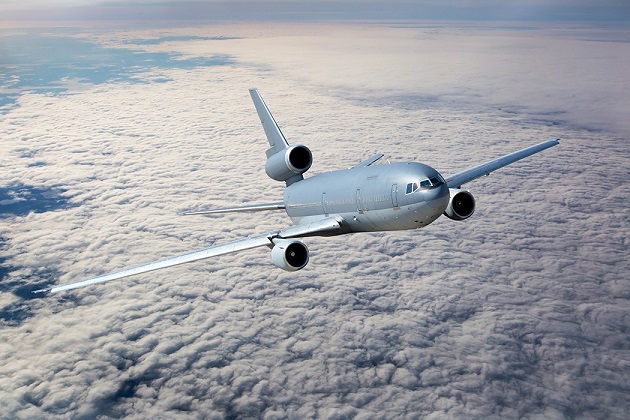
That same month, the McDonnell Douglas DC-10 was flown for the first time. On July 29, 1971, the FAA type-certificated the aircraft, a medium-to-long-range airliner with a maximum capacity of 345 passengers. Powered by three General Electric CF6-6D turbofan engines, the DC-10 became the first transport certificated by the FAA to meet reduced engine-noise levels for takeoff, approach, and taxiing operations (specified in Part 36 of the Federal Aviation Regulations). American Airlines inaugurated scheduled DC-10 service on August 5, 1971, with a flight from Los Angeles to Chicago.
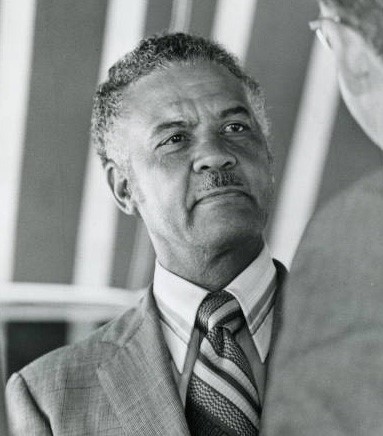
On September 21st of 1970 the Department of Transportation announced the appointment of Lt. General Benjamin O. Davis, Jr. (USAF-Ret), as Director of Civil Aviation Security for DOT. Davis advised the Secretary of Transportation on the Department’s anti-hijacking program, and coordinated the functions of the airport and airborne security force, which was comprised of components from the Departments of Defense, Justice, Transportation, and Treasury, and other government agencies.
In celebration of the Mike Monroney Aeronautical Center’s 75th Anniversary, we have prepared some trivia questions that will be featured monthly in each newsletter. Click here to participate in the July session.
If you would like to be entered into a random drawing for an MMAC Commemorative T-shirt, please provide contact information within the online trivia session. Only one entry per person per month please. Drawings will be held in October of 2021. Drawing is open only to those employed, and physically working at the Aeronautical Center.