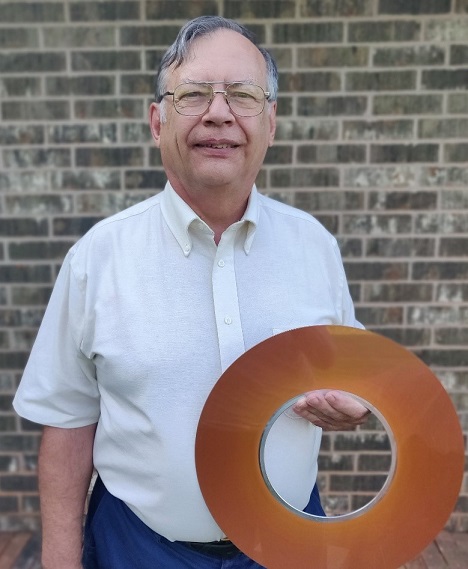
Change is inevitable for all of us, but when you think about a 46 year career with the Federal Aviation Administration, you begin to realize how many changes this one employee has experienced. Craig Burson (an Instructional Technologist in the Distance Learning Branch of the FAA Academy) has been a part of several significant changes. He remembers the Air Traffic Control strike of 1981, when thousands of controllers walked off the job to seek better working conditions, higher pay and a decreased work week. He witnessed the workforce evolve from typewriters to word processors.
He observed smoking in the workplace transition to designated smoking areas, and then to being completely prohibited from inside federal buildings. Craig also remembers when the phone company charged for long-distance by-the-minute, and when federal buildings went from easy accessibility to permanently elevated security. Times have changed, but the work ethic and dedication to the mission by Craig Burson has not.
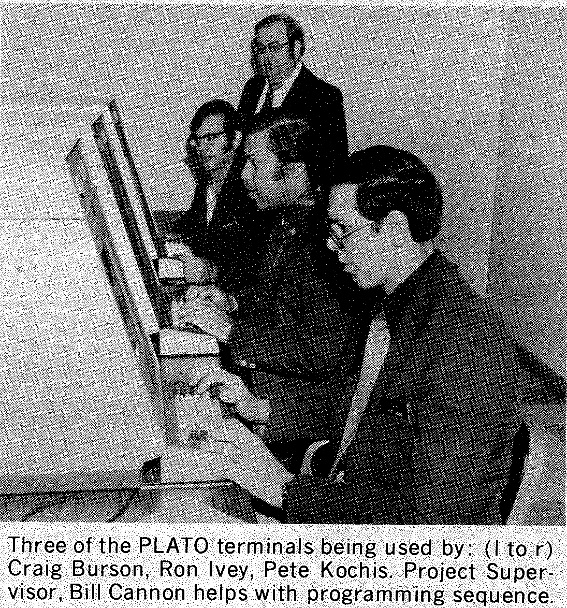
As a native Illinoisian, Craig was hired by the Aeronautical Center in the mid 1970’s because of his knowledge and expertise with Programmed Logic for Automated Teaching Operations (PLATO). At the time, the FAA Academy was exploring the possibility of using new technologies for training. Research concluded that Computer-Assisted Instruction (CAI) technology was recommended and that the Academy could initiate a project using the PLATO system from the University of Illinois.
Craig was one of two people hired with PLATO experience. He assisted in developing lessons and prototype classes. While the technology was deemed feasible, its price tag was not. A year later, an instructor from Flight Inspection needed a problem solved for on-board alerts and alarms for Flight Inspection crews. Cost studies showed that Computer Based Instruction (formerly CAI) would be appropriate and inexpensive to implement, considering the hourly costs of an aircraft. Soon thereafter, new lessons were developed.
The success of the program stretched to the American Airlines Flight Academy in Dallas, and then to Boeing and United Airlines; eventually expanding across the entire aviation industry. Not long after, the FAA Academy expanded their services to include e-learning, computer based training frameworks, which led to the development of the electronic Learning Management System (eLMS). Craig feels that his legacy to the FAA is aiding in the continuity of Distance Learning to the entire FAA workforce, and that, in itself, is quite a legacy.
In the 1990’s, Craig was instrumental in helping to launch the FAA’s first email system – "cc:MAIL." Embracing the importance of the internet, he helped to rapidly secure the "JCCBI.gov" address, which provided an incredibly inexpensive, early-day pipeline to the World-Wide Web.
Today, Craig continues to support the computer-based training of aviation professionals across the agency (through configuring and engineering the thousands of terminals which are used to deliver essential courses at facilities throughout the National Airspace System). His innovative efforts and dedication are to be commended. He enjoys his work and emphatically states, "MMAC is a great place to work!"
In his spare time, he used to enjoy flying, but now focuses his free time on auto and home repairs. Accustomed to change and being adaptable to situations is one of Craig’s major assets. Thanks to his attitude and perseverance, Craig Burson has had an exceptional career - one of maintaining the safest aerospace system in the world.