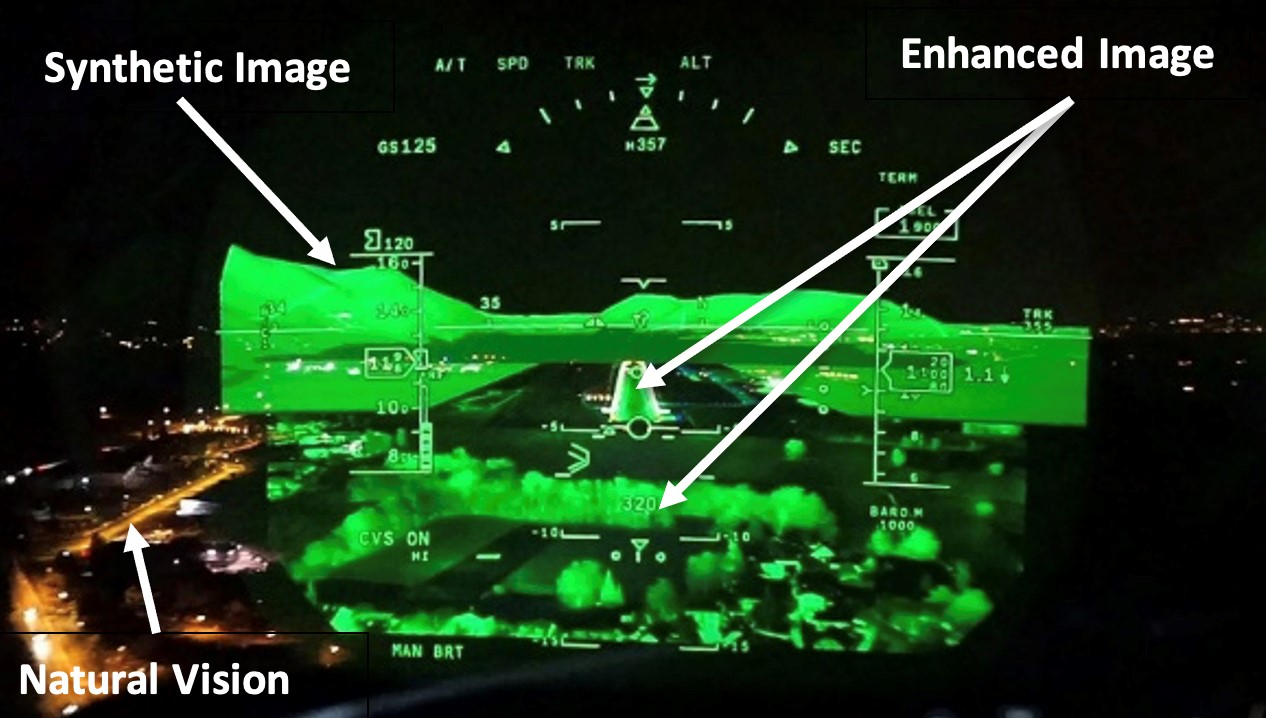
CAMI is doing innovative human factors research to enable more low visibility takeoffs and landings through the use of enhanced, synthetic and combined vision systems. The long-term value of this research is that it enables access to more airports and the movement of people, goods, and services during visibility-limiting weather events that normally would delay, or even stop flight operations from occurring. The ability to taxi, takeoff, and land in low visibility conditions is made possible by onboard aircraft equipment broadly referred to as advanced vision systems. Currently, there are three main types of advanced vision systems: Enhanced Flight Vision Systems (EFVS), Synthetic Vision Guidance Systems (SVGS), and Combined Vision Systems (CVS).
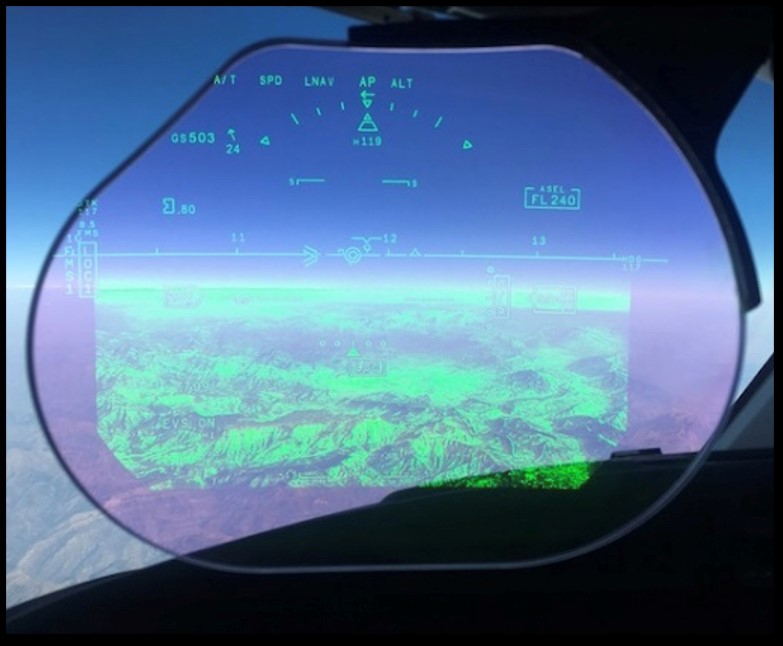
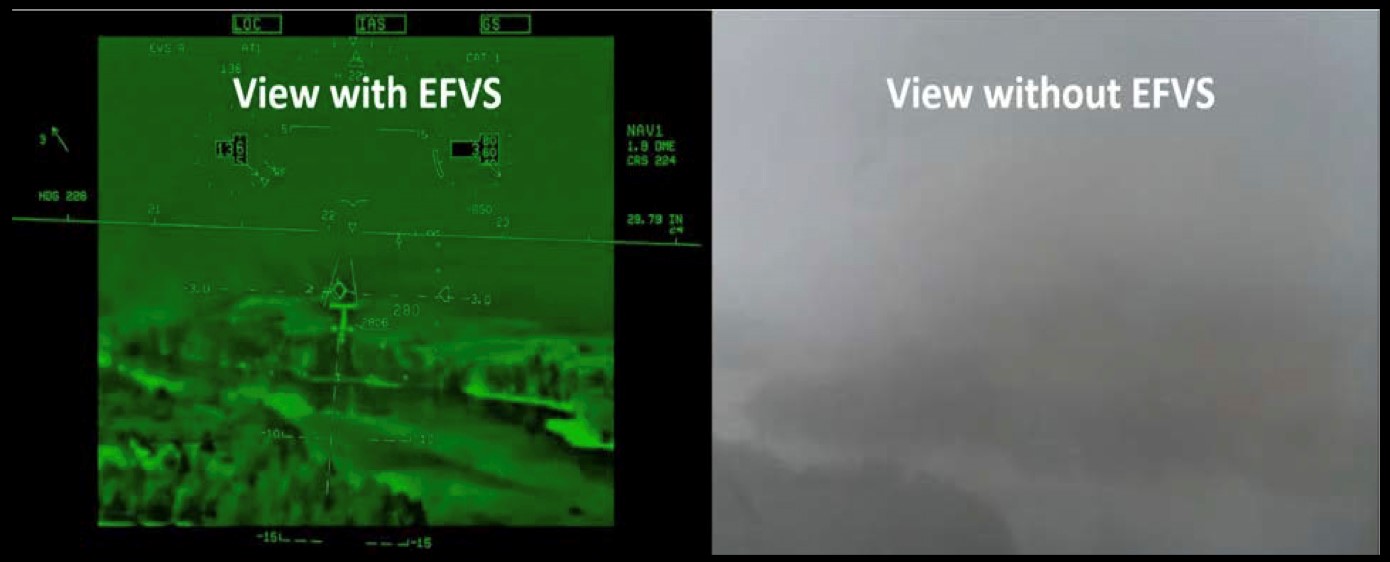
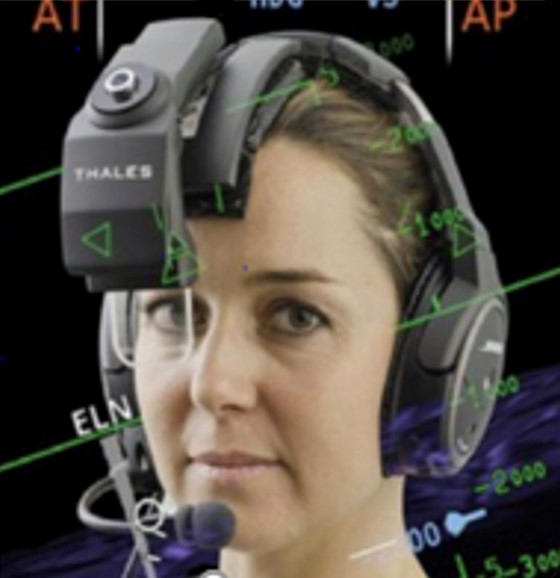
An Enhanced Flight Vision System (EFVS) uses a transparent Head-up Display (HUD) or other head-up presentation, such as a head-worn display (HWD), to combine flight information, flight symbology, navigation guidance, and a real-time image of the external scene to the pilot on one display. Imaging sensors, which may be based on forward-looking infrared (FLIR), millimeter wave radiometry, millimeter wave radar, or other real-time imaging technologies, produce an actual image of the current outside scene. During a low visibility takeoff, approach, landing, rollout, or taxi operation, the purpose of the EFVS image is to enhance the pilot’s ability to see approach lights, visual references associated with the runway environment, and other objects or features necessary to safely conduct the operation when they are not naturally visible through the windshield. Combining the flight information, navigation guidance, and sensor imagery on a HUD, HWD, or other head-up presentation allows the pilot to continue looking forward along the flightpath throughout the entire operation. Use of an EFVS may improve safety by enhancing situation and position awareness, providing visual and guidance cues to maintain a stabilized approach, and minimizing missed approaches.
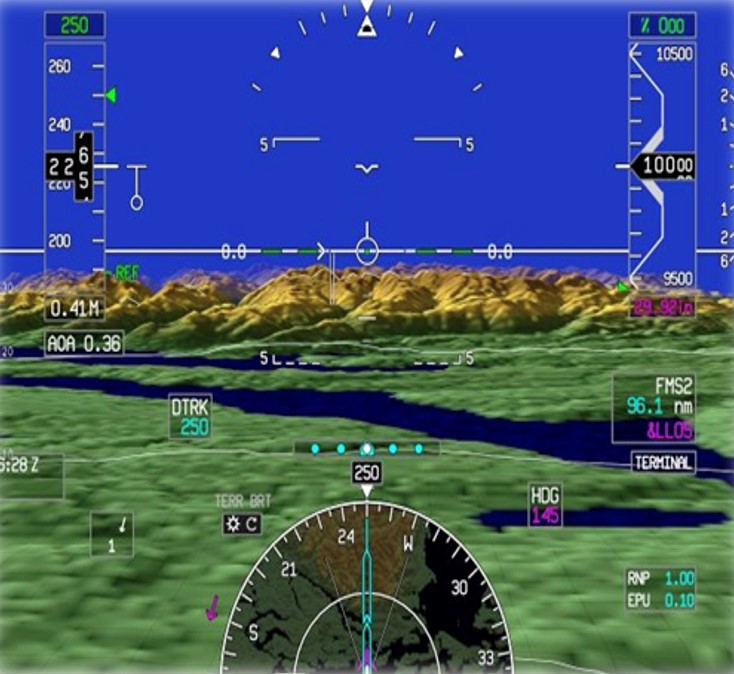
A Synthetic Vision Guidance System (SVGS) is an electronic means to display a synthetic vision image (not a real-time image) of the external scene to the pilot. It combines flight guidance and high precision position assurance monitors to provide a continuous, geospatially correct, database driven, computer-generated synthetic depiction of the nearby topography, including obstacles, and a display of the landing runway. The SVGS display may be implemented on a head-down primary flight display (PFD), a HUD, or on a HWD or other head-up presentation. SVGS includes additional symbology, integrity and performance monitors, and annunciations that enable low visibility flight operations. These additional monitors assure an accurate depiction of the external scene. SVGS differs from EFVS in that it does not produce a real-time image of the external scene; and unlike EFVS, it requires a terrain and obstacle database.
The synthetic terrain image is intended to enhance pilot awareness of spatial position relative to important features in all visibility conditions. This is particularly useful during critical phases of flight, such as takeoff, approach, and landing where important features such as terrain, obstacles, runways, and landmarks may be depicted on the SVGS display. During approach operations, the obvious advantage of SVGS is that the digital terrain image remains on the pilot’s display regardless of how poor the visibility is outside.
A Combined Vision System (CVS) merges the information, features, and functions of an EFVS and an SVGS and presents it to the pilot on one display. A CVS is a powerful tool in all visibility conditions, but it is especially beneficial in low visibility, because it enables a pilot to benefit from the information and visual imagery provided by both enhanced and synthetic vision systems.
This becomes particularly important in weather conditions that decrease the quality of the enhanced vision sensor imagery. When this occurs, the synthetic depiction of terrain, obstacles, and features continue to provide the pilot with a mental representation of the outside scene as it is a computer-generated image and is unaffected by weather.
CAMI’s research to understand how the use of EFVS, SVGS, and CVS affects pilot performance using head-down, head-up, and head-worn displays during low visibility taxi, takeoff, and landing operations is key to enabling the use of these technologies. Innovative technologies such as these are key drivers for improving the safety and performance of our National Airspace System.