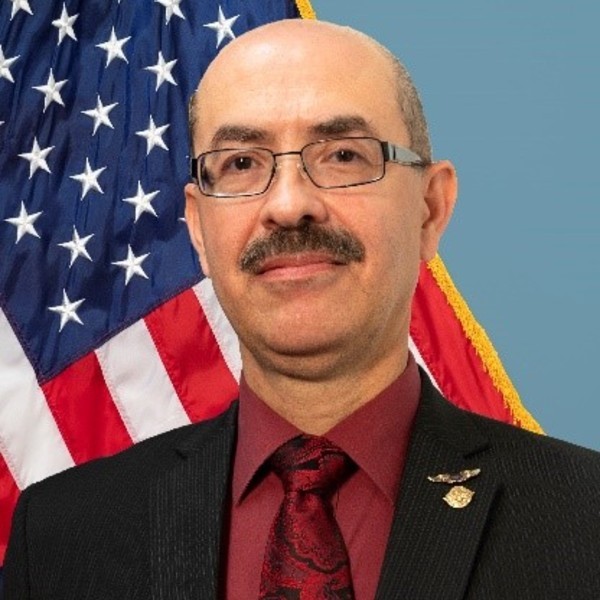
Several medical issues are presented by the increasing number of people who are present or are near U.S. spaceports during commercial space launches - either as workers, astronauts or spectators. At the 2020 Commercial Spaceport Summit, which was organized by the Global Spaceport Alliance (GSA), Dr. Melchor J. Antuñano, Director of the Civil Aerospace Medical Institute (CAMI), provided a key-note address about spaceflight participant and spaceport medical safety issues.
"Effective coordination and collaboration between the FAA, commercial human spaceflight companies, spaceport authorities, and local first-responders is critical to optimize the safety of spaceflight participants, spaceflight company employees, spaceport personnel and the general public (spectators) during space launch operations," Dr. Antuñano told the participants. His presentation centered on the need for commercial human spaceflight medical research and other operational medical safety issues.
Dr. Antuñano detailed the justification of conducting medical research in support of human commercial space flights, including the individual, environmental and operational risk factors encountered during suborbital space flights.
"Since the first human space flight by Yuri Gagarin in April 12, 1961, most of the medical and physiological data collected to date involves the effects of space flight on generally normal and healthy career astronauts and cosmonauts," said Dr. Antuñano. He shared available information reported during ground and in-flight (short and long-duration orbital flights) medical events among career astronauts. He noted, however, the aerospace medicine community has limited medical experience and knowledge about individuals with significant medical problems who have flown in space.
Dr. Antuñano described a few examples of non-career spaceflight participants who have undergone medical procedures to resolve significant medical issues that initially prevented them from flying in space. Once their medical problems were resolved they were medically cleared and had uneventful space flights.
"Commercial space flights will create the opportunity for non-career astronauts with certain medical conditions to fly in space. Medical information collected from space flight participants (especially those with medical waivers) will be extremely important to establish prospective medical databases," Dr. Antuñano noted.
There are ongoing conversations among representatives from the Federal Aviation Administration (FAA), the National Aeronautics and Space Administration (NASA), MITRE Corporation, the Commercial Spaceflight Federation, SpaceX and other commercial space operators to establish a Health Data Collection System for spaceflight participants.
Dr. Antuñano provided examples of unique medical research that has been conducted through the FAA Center of Excellence for Commercial Space Transportation (FAA COE CST). One of the most significant accomplishments of this team was the development and publication of a report on Flight Crew Medical Standards & Spaceflight Participant Medical Acceptance Guidelines. This report is being used as the primary reference by the American Society for Testing and Materials International Committee on Commercial Spaceflight (F47) in an ongoing multi-organizational effort to recommend the implementation of international suborbital medical standards for crew and spaceflight participants.
Additionally, Dr. Antuñano mentioned ongoing activities led by the Commercial Spaceflight Federation to develop a Human Research Roadmap for addressing the risks to spaceflight participants in the commercialization of space.
Dr. Antuñano advised that considering the remote locations of most spaceports, they must be prepared to support the appropriate response to medical and other emergencies among customers and personnel involved in commercial spaceflight operations, as well as potential emergencies affecting public spectators. In addition to operational incidents or accidents at or in the proximity of spaceports, there are other risk factors such as pre-existing medical conditions, distance to the nearest medical care facilities, local ecology (fauna, flora), local geography and weather (heat, cold, humidity), which can be dangerous to spectators.
"Effective spaceport emergency and disaster plans are an essential safety component that contribute to the success of the emerging human commercial space flight industry," said Dr. Antuñano.