Over fifty-six years ago, aircraft flew over the Oklahoma City area faster than the speed of sound, generating sonic booms – on purpose! It is interesting to note that people at the Aeronautical Center were performing studies of these booms.
On April 25, 1965, the Federal Aviation Agency made public a summary of its Oklahoma City sonic boom study, in which U.S. Air Force jets had subjected residents to 1,253 booms during daylight hours. Most boom intensities ranged between 1.0 and 2.0 pounds of overpressure per square foot, but adverse atmospheric influences caused approximately 11 percent to exceed the intended limit of 2.0 pounds of overpressure. FAA also released an interim report on the related test at White Sands, N.M., in which Air Force jets subjected 16 representative structures to 1,494 booms varying in intensity from 2.0 to 20.0 pounds of overpressure. The findings of the two tests included:
In releasing the information, Administrator Najeeb Halaby stated his conclusion that a supersonic transport could be designed in terms of configuration, operating attitude, and flight paths so as to achieve public acceptance in the early 1970s. However, on March 8, 1969, the Federal government lost its appeal in a class action suit involving claims for property damage - allegedly caused by the Oklahoma City tests.
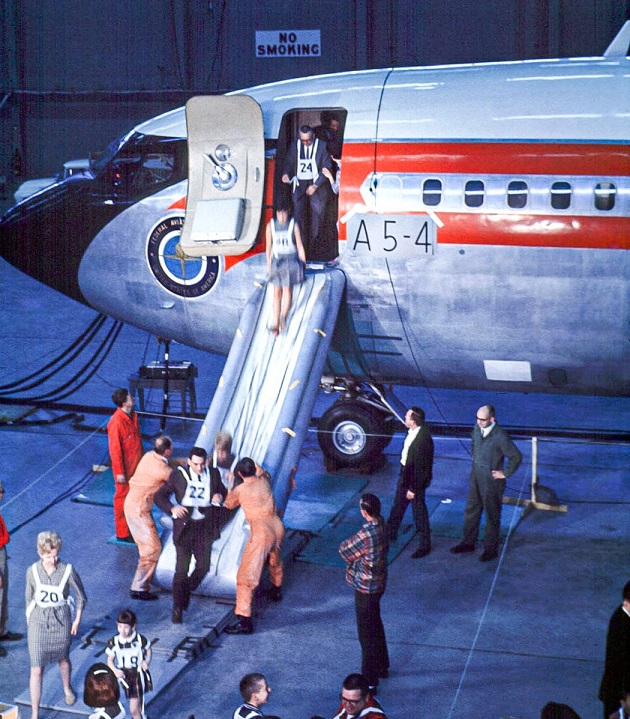
June 7, 1965: New rules governing the rapid evacuation of passengers from aircraft became effective this date. The new regulations required all carriers and commercial operators using aircraft with a seating capacity of more than 44 passengers to demonstrate, among other things, the ability under simulated emergency conditions to evacuate a full passenger load through only half of the airplane’s exits within two minutes. As a result of the study, the minimum number of flight attendants on an aircraft was raised: one attendant for planes with 10-44 passenger seats; two for 45-99; three for 100-149; and four for more than 149 seats. Operators were also required to brief passengers on the location of emergency exits and provide them with cards showing their operation. The new regulations also set emergency equipment requirements. Aircraft were required to be equipped by July 1, 1966, with battery-powered megaphones, increased emergency lighting capacity, larger emergency-exit signs, and ropes or approved equivalent devices at over-wing exits.
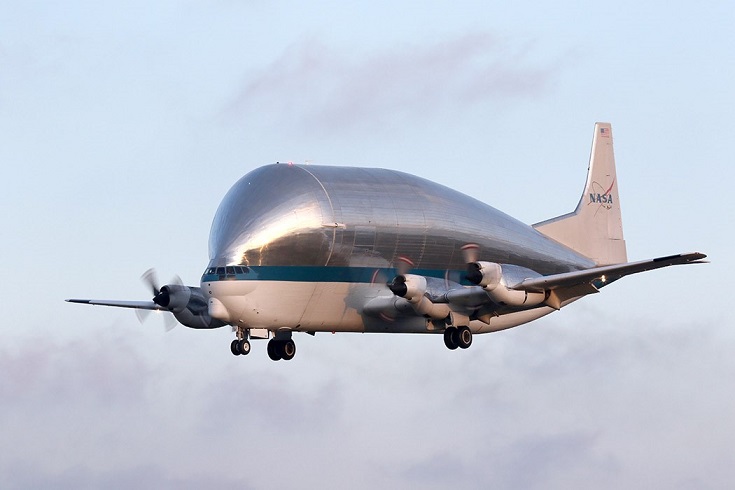
August 31, 1965: The world’s largest cargo plane, the Aero Spacelines B-377SG Super Guppy completed its maiden flight. A converted Boeing 377 Stratocruiser with a capacity of 49,790 cubic feet, the Super Guppy was under contract to NASA for use in hauling rockets and other space equipment.
October 1, 1965: As part of the agency’s continuing decentralization program, FAA placed the Aeronautical Center in Oklahoma City under a Director reporting straight to the FAA Administrator. A similar change on October 22 placed the National Aviation Facilities Experimental Center in Atlantic City, N.J., under a Director reporting the Administrator. Both Centers had previously been headed by a Manager, and had been under the jurisdiction of various offices or services in Washington.
October 22, 1965: The US Air Force began operating a Central NOTAM (Notice to Airmen) Facility (CNF) in the FAA Headquarters Building, Washington, D.C., after moving from Tinker AFB, Oklahoma. The military NOTAM facility was co-located with the FAA-operated civil NOTAM system (National Flight Data Center), and the two were eventually consolidated into a single National NOTAM System managed by the Federal Aviation Agency.
November 21, 1965: The FAA renamed the Civil Aeromedical Research Institute (CARI) to the Civil Aeromedical Institute (CAMI).
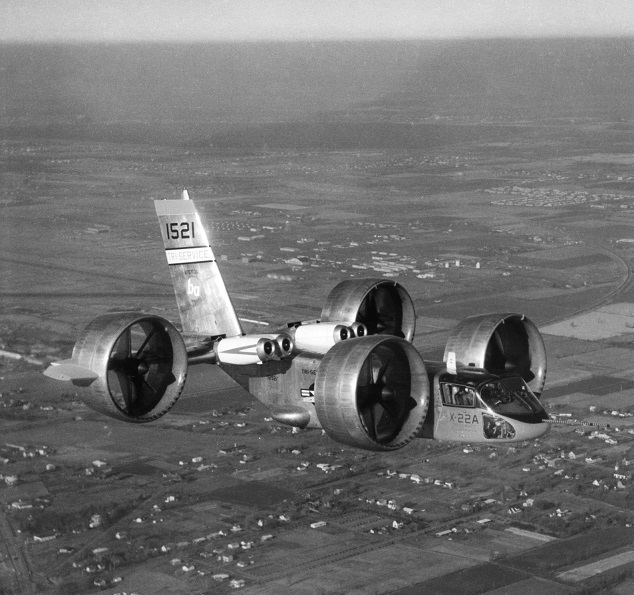
March 17, 1966: The Bell Triservice X-22A, a tilting-duct Vertical/Short Takeoff and Landing (V/STOL) aircraft, made its maiden flight. On Jun 30, 1966, with the tilting ducts at an angle of 30 degrees, the aircraft made its first STOL takeoff, and subsequently attained a top speed in excess of 100 miles an hour.
September 30, 1966: The Federal Aviation Agency moved all of its aeromedical research to CAMI in Oklahoma City.
April 1, 1967: The Department of Transportation (DOT) began operations. At the same time, the Federal Aviation Agency ceased independent operations and became the Federal Aviation Administration (FAA) - a Modal agency within the new Department.
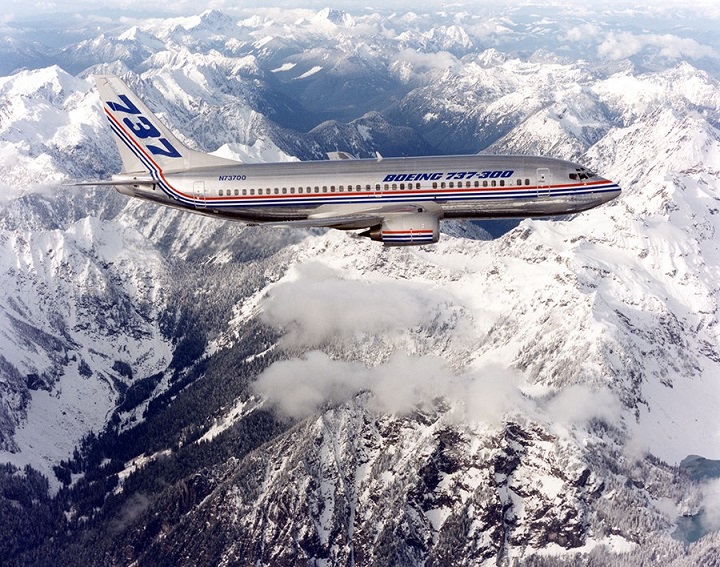
April 9, 1967: The Boeing 737 made its first flight. On December 15, 1967, the FAA type-certificated the airliner - a short-range jet transport with swept wings, wing-mounted twin engines, and a maximum capacity of 107 passengers - for operation with a two-man cockpit crew. The plane entered scheduled airline service on February 10, 1968.
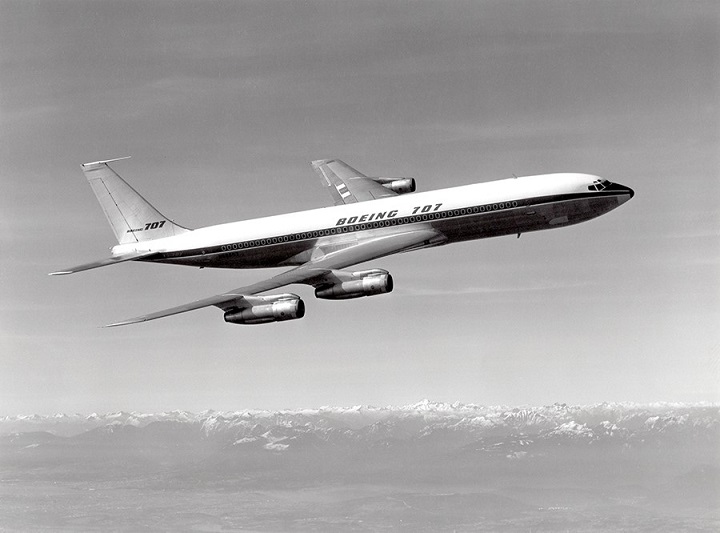
July 7, 1967: A Pan American World Airways Boeing 707 made the first fully automatic approach and landing by a four-engine jet aircraft with passengers on board.
The 1960s were full of change, and the Aeronautical Center played a huge role in building the foundation of safety for our National Airspace System. Whether it was related to supersonic transport, or normal flight operations, the Center was - and continues to be - a hub for aviation safety.
In celebration of the Mike Monroney Aeronautical Center’s 75th Anniversary, we have prepared some trivia questions that will be featured monthly in each newsletter. Click here to participate for the May session. If you would like to be entered into a random drawing for an MMAC Commemorative T-shirt, please provide contact information within the online trivia session. Only one entry per person per month please. Drawings will be held in October of 2021. Drawing is open only to those employed, and physically working at the Aeronautical Center.