Can you imagine what it would be like to taste food with your feet? Butterflies have sensors on their legs that inform them about the plants they stand upon. Just as a human parent tastes baby food during feeding time, a butterfly can come to rest upon a leaf and determine if it would be palatable to its offspring. If so, it will choose to lay eggs on that plant.
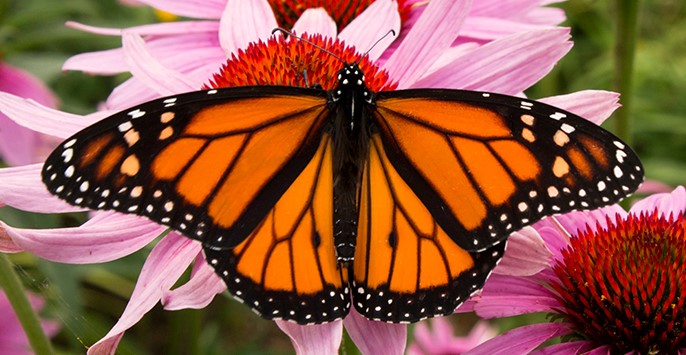
Adult butterflies do not chew their food. They have a long tube (proboscis) that allows them to draw nectar from flowers or juices from fruits. One notable butterfly feeds upon many different kinds of flowers, but only lays eggs on one type of plant. The iconic, orange and black Monarch butterfly depends solely upon milkweeds to feed their young.
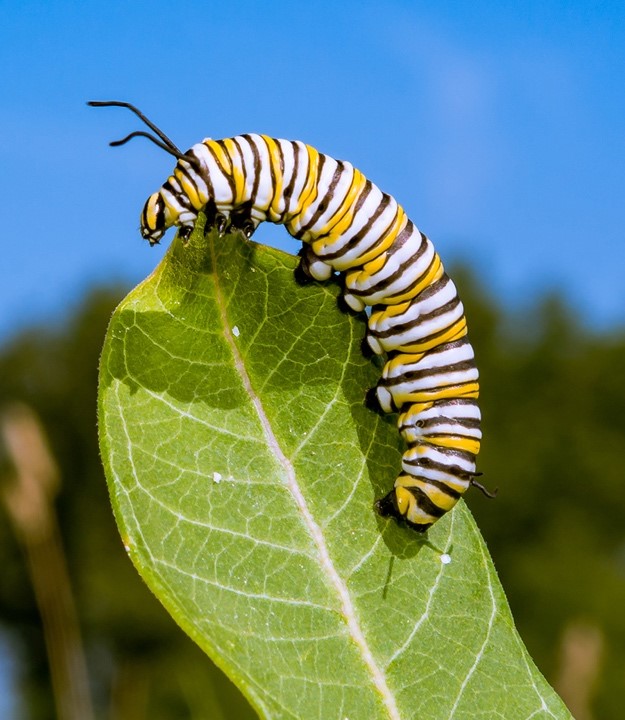
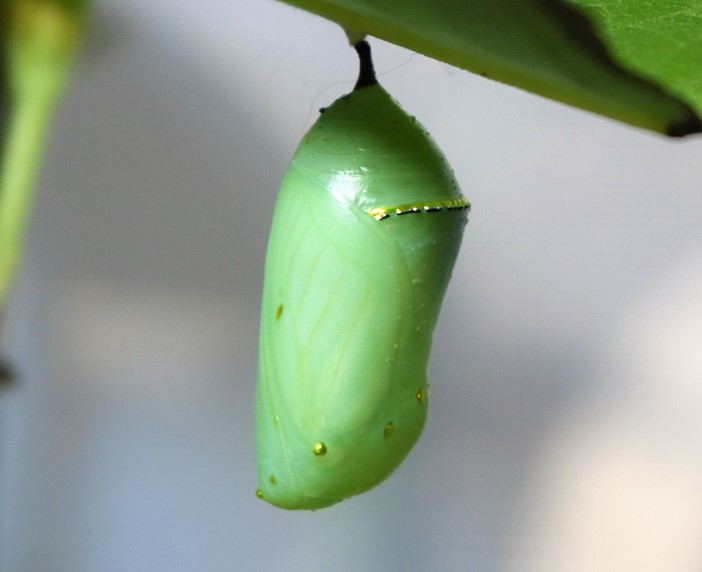
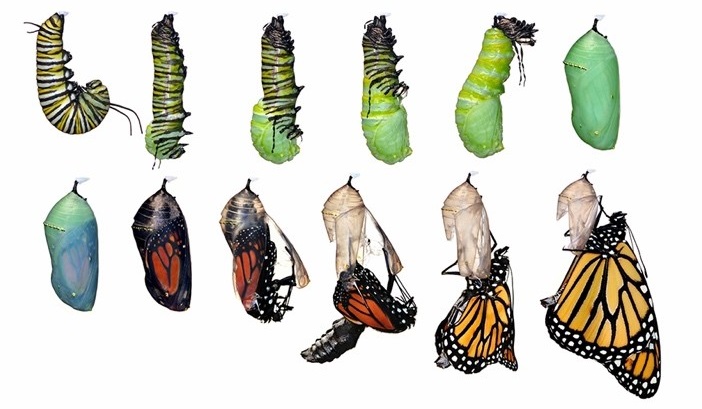
Monarch caterpillars are strikingly beautiful creatures, covered in high-contrast bands of black, white and yellow. They hatch from eggs in a matter of days, and immediately begin feasting upon their shell, and the toxic leaves of milkweed plants, which naturally contain cardiac glycosides. For about two weeks, caterpillars consume at a constant rate, and eventually pupate into a chrysalis (shell). After about 10 to 15 days, they transform, and emerge as adults, retaining the poison from their diet as caterpillars (which protects them from being eaten by predators).
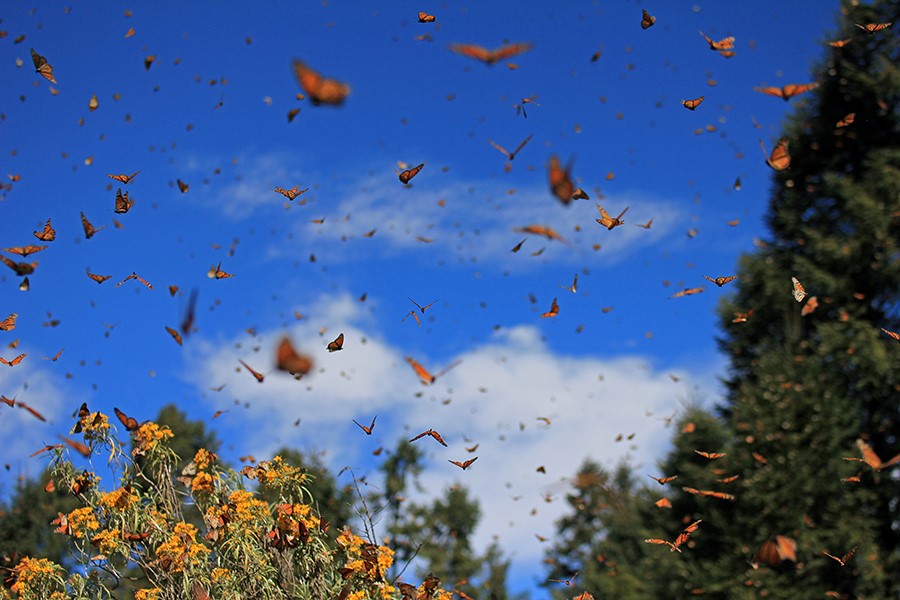
As adults, Monarch butterflies continue to feed, fly, and reproduce throughout the U.S. and southern Canada for several generations. Adults typically live for 2 to 6 weeks, covering approximately 100 miles a day in flight, while heading north in Spring. The cycle continues; butterflies lay eggs, the eggs hatch into hungry caterpillars, the caterpillars eat milkweeds and pupate, and eventually emerge again as adults, who fly further north and repeat the process.
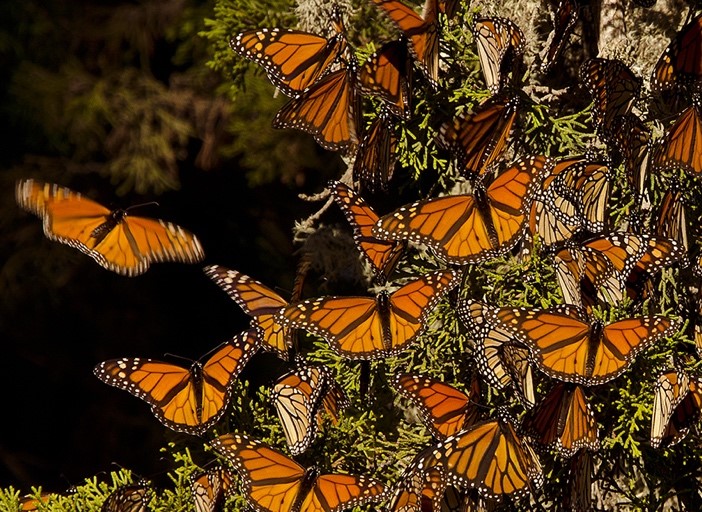
During the month of September, they are in the fourth generation, and are making the trek back toward Mexico, where they spend the winter. This generation of Monarchs is a stronger, "Super" version of butterfly with a specific mission; to migrate to Mexico. Surprisingly, they may live 8 to 10 times longer than normal Monarchs (up to 8 months). After wintering in Mexico, this generation flies north to lay eggs in Texas and dies, but the life cycle continues.
Unfortunately, the population of Monarch butterflies has been in a steady decline over recent years, due to habitat changes. With the Monarch migration highway being primarily between Mexico and Minnesota, Oklahomans have a front row seat to this show. This location also provides us with the ability to help feed the butterflies along the way to their destination in either direction.
You can help by establishing a wildflower garden in your yard for all pollinators. By adding milkweeds to the mix, you will be able to observe the Monarch life cycle up close. Milkweed availability is very important for the Monarch’s Spring journey. Though there are over 100 different species of milkweed, monarchs prefer about 30 species of them. So visit Monarch Joint Venture to learn which species is best for your region. Again, Monarchs will feed on various flowers, but they only lay eggs on milkweed plants.
You can also help educate your children by buying a butterfly kit. That way, the whole family can appreciate the life cycle of this important pollinator. Butterflies also need a place to rest. So if you’re building a habitat, remember that flat stones offer them a place to bask in the sun and rest. Avoid spraying insecticides in your yard, because they kill insects. Butterflies can often be found puddling – drinking water and extracting minerals from damp areas of the ground. If you put coarse sand in a shallow pan and add it to your habitat, butterflies will use it to drink and collect the minerals they need – make sure to keep it moist by adding water.
Next time you eat a meal, consider how lucky you are that you don’t have to stand on a sandwich in order to taste it, or wear mint flavored socks for fresh breath. But for those less fortunate creatures who do have taste buds on their legs, it is good for us to provide a place for them to dine and rest, no matter how bizarre their consumption methods are. They make up for the strangeness with incomparable beauty.
Here is a very informative video that follows the Monarch migration via Google Earth. Time is drawing near for one of nature’s most beautiful spectacles! Don’t miss it!