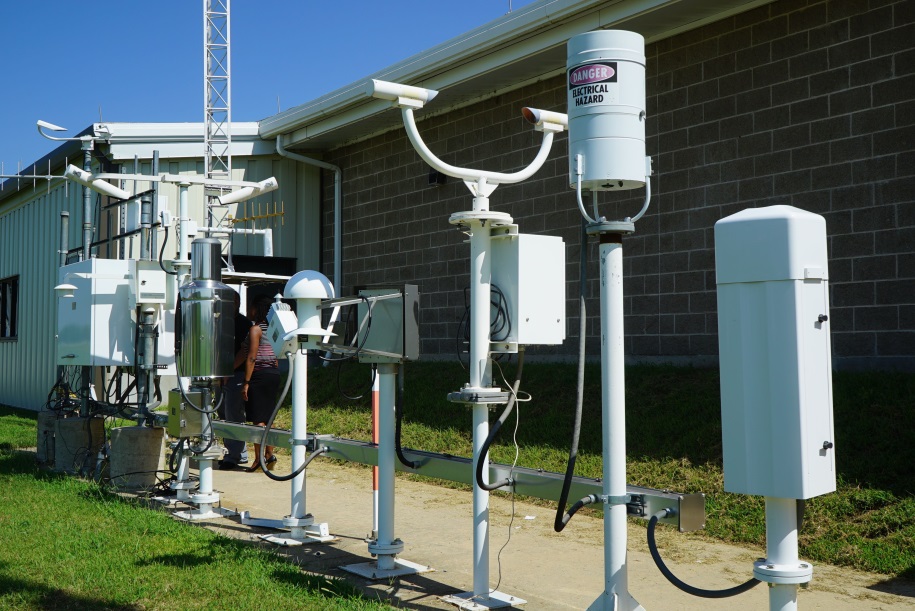
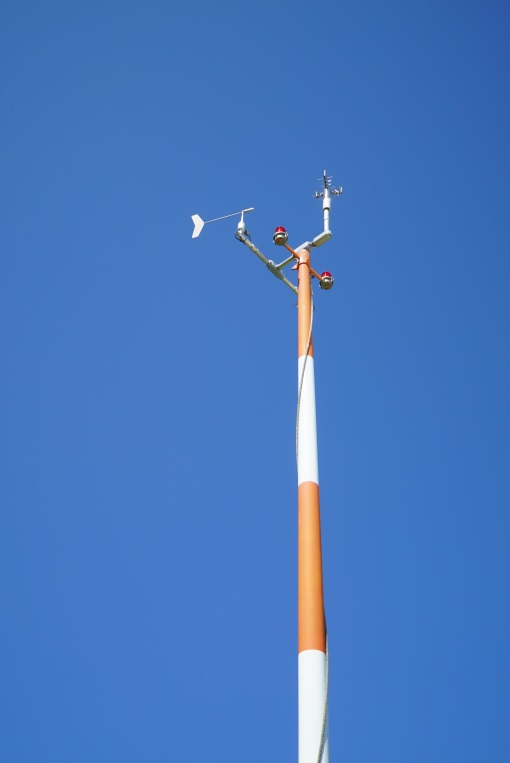
Ever been flying into an airport and have seen this equipment? While it might look like some candy cane colored pole-vaulting contraption, it actually serves as a vital set of weather instruments that help provide primary weather surface observations to a variety of facilities across our nation. Known as “ASOS” or more specifically, an Automated Surface Observing System it collects and reports surface weather observations in support of aviation operations, weather forecasting, issuance of weather warnings, and the archiving of climatological data. ASOS measures critical aviation weather parameters at our nation’s airports, indicating those weather conditions that could potentially threaten safety. ASOS detects significant changes while transmitting hourly observations via various networks. It reports basic weather elements such as sky conditions, visibility, present weather conditions, visual obstructions, barometric pressure, ambient temperature, wind speed and direction, precipitation and much more as if that isn’t enough. One of the primary strengths of ASOS is that it measures critical weather parameters where they are needed most, at the airport’s runway touchdown zone.
Karen Winston, an FAA Meteorologist (AJW-144) describes ASOS as something that “repeatedly and regularly provides observations via a computer-generated voice directly to planes near airports, using FAA’s ground-to-air radio. Automated messages can also be provided from a telephone dial-in port.” Winston elaborates that “ASOS monitors, configures, archives, and transmits observations automatically. It communicates a distinct report whenever conditions surpass preselected weather levels, such as when the cloud ceiling decreases below 3,000 feet.”
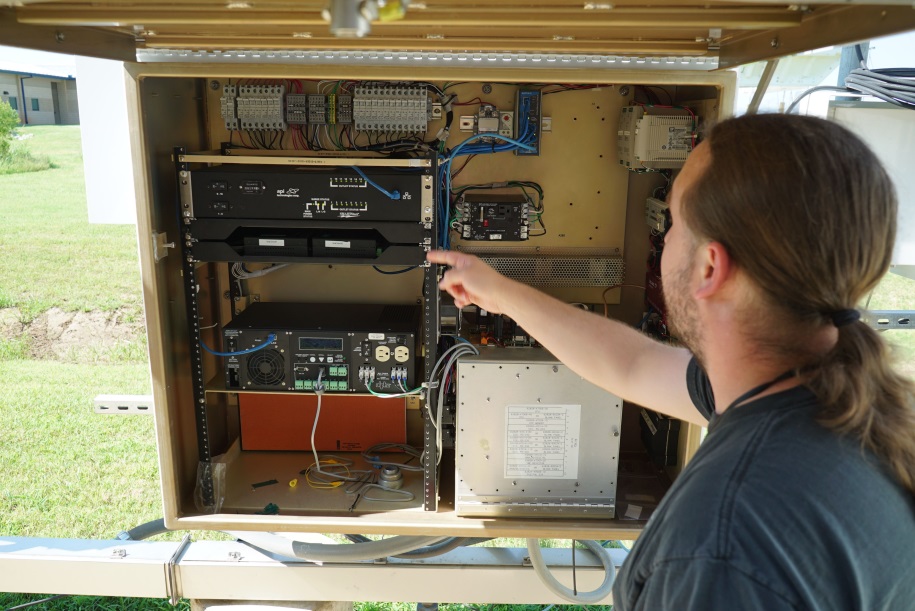
For ASOS to remain viable as a mission critical system for the next 20 years, a technology refresh is required. Fortunately, a Service Life Extension Program (SLEP) for ASOS has been adapted. This program facilitates the purchase of new ASOS Acquisition Control Units (ACU) and Data Collection Package (DCP) hardware. These acquisitions along with the development of associated software and information technology provide the necessary means to ensure that aviation weather information is being properly collected well into the future.
The project is a tri-Agency undertaking between the FAA, the National Weather Service, and the Department of the Defense. Engineers and meteorologists at the Aeronautical Center work collaboratively in the Weather Systems Team (AJW-144) refining requirements, writing code and tests for the Weather Acquisition and Reporting Software (WARS). WARS represents the core function of ASOS. Team members work diligently performing extensive software tests, while patiently monitoring the system as WARS continues to progress in development.
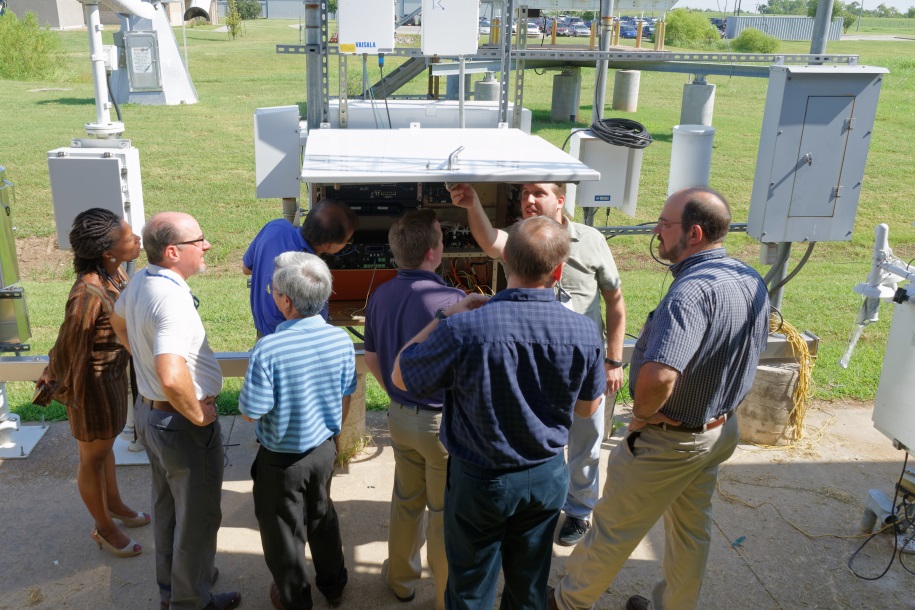
Last month, meteorologists from the National Weather Service who are involved with the project visited the Aeronautical Center to view the current hardware upgrades and become familiar with the Accelerated Algorithm Testing process as developed by contract Engineer, Tandy Jones (AJW-144). With implementation of this new analysis process, individual tests that used to take several days or weeks to complete can now be run in just a few seconds or minutes, saving valuable time in the delivery schedule.
Over 1,000 ASOS stations exist within our nation’s airspace system. If you would like to learn more about Surface Weather Observations Stations and their locations visit http://www.faa.gov/air_traffic/weather/asos/.