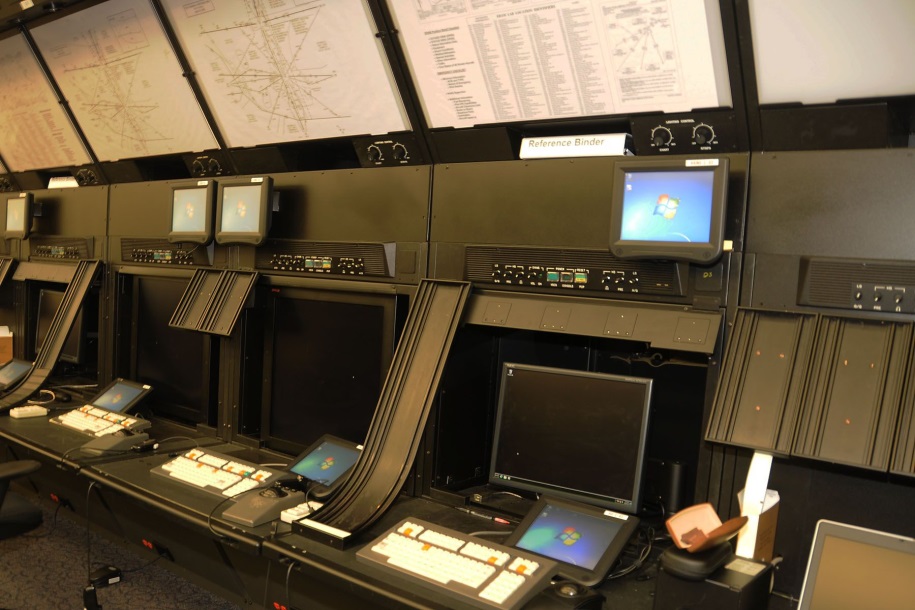
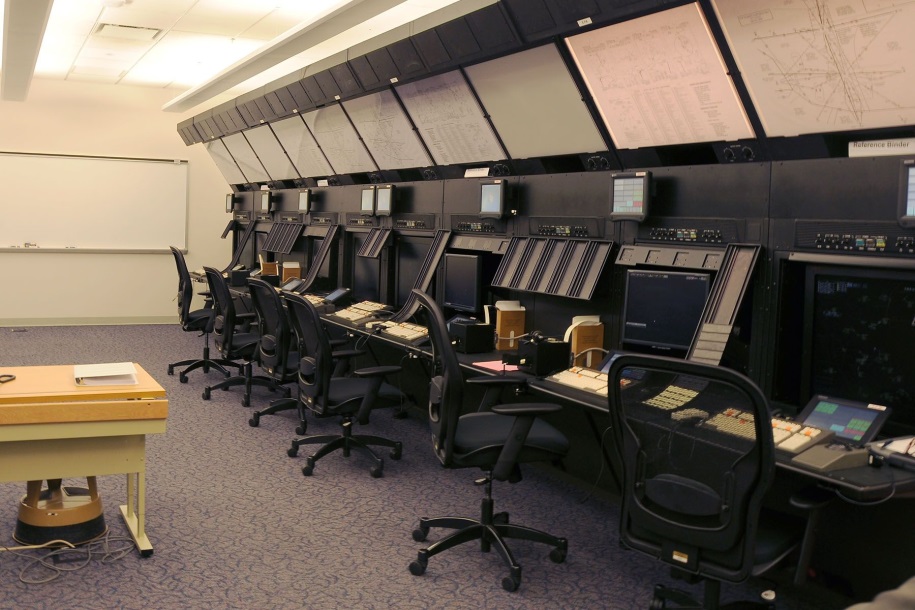
The FAA Academy’s newest Air Traffic simulation laboratory will begin service in April, allowing for nearly a 100 additional students to be trained in 2015. Thanks to the efforts of a great number of people in the Academy, En Route initial qualification training will have the ability to increase student capacity by 300 each year. Located in room 166 of the Thomas P. Stafford Building, the eight sector lab mimics the actual setup and equipment area of field facilities. Eight complete sets of cabinets, called Sectors, were offered to the Academy by the Air Traffic Systems ERAM Implementation & Integration Office (AJM-2131) to make this lab appear identical to the Academy’s two other En Route simulation labs. However, there are some differences between this lab and the existing two. The differences represent something that brings Academy personnel much pride.
All hardware components were purchased, installed, and tested by Academy personnel. Team members from the Air Traffic Division (AMA-500) and NAS Technical Services Division (AMA-900) worked together to acquire and assemble a full-fidelity laboratory in just over eighteen months. The simulation software known as “SIGNAL” (Simulation and Integration of Ground, Network, and Air Links) is a suite of simulation software components designed and maintained by the Academy specifically for Air Traffic Control training. SIGNAL makes the airplanes fly and enables communication between the controllers (ATC students) and the aircraft (remote pilots) as well as communicating to surrounding simulated facilities. SIGNAL’s realistic simulation capabilities and ease of use is unmatched. Proudly, FAA personnel are entirely responsible for developing, maintaining and owning the system.
Originally, the task put forth to the Academy was to increase throughput (student enrollment) to meet the current and future needs of En Route Air Traffic Control field facilities. Various restrictions involving acquisition, budget, and time-to-completion deadlines added to the complexity of the task. Thanks to the commitment from FAA Headquarters and the dedicated employees of the Academy, the new SIGNAL En Route air traffic simulation is now a reality.